Thalamo-cortical chimeroid
Neurodevelopmental toxicology
Functional connectivity mapping
Prenatal drug safety
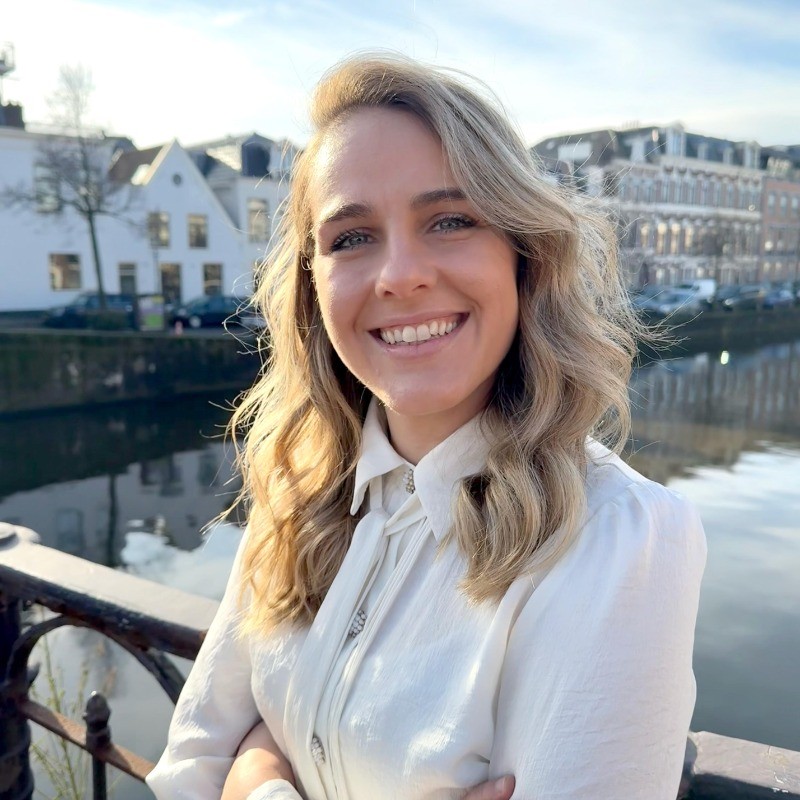
Noelia’s proposed research project focuses on developing stem cell based Thalamo‑cortical Chimeroid (ThC‑Ch) models to investigate how harmful compounds affect the developing human brain during pregnancy. These models are essential for studying the potential impact of medications that cannot be discontinued during pregnancy, such as treatments taken for epilepsy or bipolar disorder, who must continue antiepileptic or mood‑stabilizing drugs to manage their conditions.
For a closer look at her research, motivation, and the inspiration behind her award‑winning work, check out the interview below:
01
Can you briefly describe your research and what inspired you to pursue this field of study?
During my PhD, I studied how subcortical structures, particularly the thalamus, actively organize late cortical development in rodent models. This work led me to ask how these processes operate in humans, whose brains follow unique and prolonged developmental trajectories. To address this, I developed advanced human stem cell–derived brain models named ‘chimeroids’ that capture key aspects of human-specific development and individual variability.
02
How does high‑density microelectrode array (HD-MEA) technology support or enable your research, and what does it allow you to see that other methods do not?
A major challenge in studying these human systems is linking cellular development to functional circuit activity. High-density microelectrode array (HD-MEA) technology enables long-term, high-resolution recordings of neuronal activity across large networks, allowing the tracking of how functional connectivity and synchrony emerge over time.
03
How do you envision the outcomes of your research shaping or advancing your field in the coming years?
I envision my research contributing to a deeper understanding of how human brain circuits develop over time, particularly how coordination and timing influence their vulnerability to disease. By combining human-specific models with HD‑MEA recordings, this work aims to inform future approaches to studying human brain development and neurodevelopmental disorders.









.svg)