





Brain Slices
(paper)
High-Quality Seizure-Like Activity from Acute Brain Slices Using a Complementary Metal-Oxide-Semiconductor High-Density Microelectrode Array System
J. Vis. Exp. (2024). DOI:10.3791/67065

2024
Keywords:
Complementary metal-oxide-semiconductor high-density microelectrode array (CMOS-HD-MEA) systems can record neurophysiological activity from cell cultures and ex vivo brain slices in unprecedented electrophysiological detail. CMOS-HD-MEAs were first optimized to record high-quality neuronal unit activity from cell cultures but have also been shown to produce quality data from acute retinal and cerebellar slices. Researchers have recently used CMOS-HD-MEAs to record local field potentials (LFPs) from acute, cortical rodent brain slices. One LFP of interest is seizure-like activity. While many users have produced brief, spontaneous epileptiform discharges using CMOS-HD-MEAs, few users reliably produce quality seizure-like activity. Many factors may contribute to this difficulty, including electrical noise, the inconsistent nature of producing seizure-like activity when using submerged recording chambers, and the limitation that 2D CMOS-MEA chips only record from the surface of the brain slice. The techniques detailed in this protocol should enable users to consistently induce and record high-quality seizure-like activity from acute brain slices with a CMOS-HD-MEA system. In addition, this protocol outlines the proper treatment of CMOS-HD-MEA chips, the management of solutions and brain slices during experimentation, and equipment maintenance.

Brain Slices
(paper)
DENOISING: Dynamic enhancement and noise overcoming in multimodal neural observations via high-density CMOS-based biosensors
Front. Bioeng. Biotechnol. (2024). DOI: /10.3389/fbioe.2024.1390108
2024
Keywords:
Large-scale multimodal neural recordings on high-density biosensing microelectrode arrays (HD-MEAs) offer unprecedented insights into the dynamic interactions and connectivity across various brain networks. However, the fidelity of these recordings is frequently compromised by pervasive noise, which obscures meaningful neural information and complicates data analysis. To address this challenge, we introduce DENOISING, a versatile data-derived computational engine engineered to adjust thresholds adaptively based on large-scale extracellular signal characteristics and noise levels. This facilitates the separation of signal and noise components without reliance on specific data transformations. Uniquely capable of handling a diverse array of noise types (electrical, mechanical, and environmental) and multidimensional neural signals, including stationary and non-stationary oscillatory local field potential (LFP) and spiking activity, DENOISING presents an adaptable solution applicable across different recording modalities and brain networks. Applying DENOISING to large-scale neural recordings from mice hippocampal and olfactory bulb networks yielded enhanced signal-to-noise ratio (SNR) of LFP and spike firing patterns compared to those computed from raw data. Comparative analysis with existing state-of-the-art denoising methods, employing SNR and root mean square noise (RMS), underscores DENOISING’s performance in improving data quality and reliability. Through experimental and computational approaches, we validate that DENOISING improves signal clarity and data interpretation by effectively mitigating independent noise in spatiotemporally structured multimodal datasets, thus unlocking new dimensions in understanding neural connectivity and functional dynamics.

Brain Slices
(paper)
A high-density multi-electrode platform examining the effects of radiation on in vitro cortical networks
Sci. Rep. (2024). DOI: 10.1038/s41598-024-71038-6
2024
Keywords:
Radiation therapy and stereotactic radiosurgery are common treatments for brain malignancies. However, the impact of radiation on underlying neuronal circuits is poorly understood. In the prefrontal cortex (PFC), neurons communicate via action potentials that control cognitive processes, thus it is important to understand the impact of radiation on these circuits. Here we present a novel protocol to investigate the effect of radiation on the activity and survival of PFC networks in vitro. Escalating doses of radiation were applied to PFC slices using a robotic radiosurgery platform at a standard dose rate of 10 Gy/min. High-density multielectrode array recordings of radiated slices were collected to capture extracellular activity across 4,096 channels. Radiated slices showed an increase in firing rate, functional connectivity, and complexity. Graph-theoretic measures of functional connectivity were altered following radiation. These results were compared to pharmacologically induced epileptic slices where neural complexity was markedly elevated, and functional connections were strong but remained spatially focused. Finally, propidium iodide staining revealed a dose-dependent effect of radiation on apoptosis. These findings provide a novel assay to investigate the impacts of clinically relevant doses of radiation on brain circuits and highlight the acute effects of escalating radiation doses on PFC neurons.

Organoids & Spheroids
(paper)
Generation of human region-specific brain organoids with medullary spinal trigeminal nuclei
Cell Stem Cell (2024). DOI: 10.1016/j.stem.2024.08.004
2024
Keywords:

Highlights
- Human medullary SpV-like organoids (hmSpVOs) are created from hPSCs
- hmSpVOs resemble the spinal trigeminal nucleus (SpV) of the dorsal medulla
- hmSpVOs exhibit structural and functional maturation in long-term culture
- Trigeminothalamic tracts are established between hmSpVOs and thalamic organoids
Summary
Brain organoids with nucleus-specific identities provide unique platforms for studying human brain development and diseases at a finer resolution. Despite its essential role in vital body functions, the medulla of the hindbrain has seen a lack of in vitro models, let alone models resembling specific medullary nuclei, including the crucial spinal trigeminal nucleus (SpV) that relays peripheral sensory signals to the thalamus. Here, we report a method to differentiate human pluripotent stem cells into region-specific brain organoids resembling the dorsal domain of the medullary hindbrain. Importantly, organoids specifically recapitulated the development of the SpV derived from the dorsal medulla. We also developed an organoid system to create the trigeminothalamic projections between the SpV and the thalamus by fusing these organoids, namely human medullary SpV-like organoids (hmSpVOs), with organoids representing the thalamus (hThOs). Our study provides a platform for understanding SpV development, nucleus-based circuit organization, and related disorders in the human brain.

Organoids & Spheroids
(paper)
Brain Chimeroids reveal individual susceptibility to neurotoxic triggers
Nature (2024). DOI: 10.1038/s41586-024-07578-8
2024
Keywords:
Interindividual genetic variation affects the susceptibility to and progression of many diseases1,2. However, efforts to study how individual human brains differ in normal development and disease phenotypes are limited by the paucity of faithful cellular human models, and the difficulty of scaling current systems to represent multiple people. Here we present human brain Chimeroids, a highly reproducible, multidonor human brain cortical organoid model generated by the co-development of cells from a panel of individual donors in a single organoid. By reaggregating cells from multiple single-donor organoids at the neural stem cell or neural progenitor cell stage, we generate Chimeroids in which each donor produces all cell lineages of the cerebral cortex, even when using pluripotent stem cell lines with notable growth biases. We used Chimeroids to investigate interindividual variation in the susceptibility to neurotoxic triggers that exhibit high clinical phenotypic variability: ethanol and the antiepileptic drug valproic acid. Individual donors varied in both the penetrance of the effect on target cell types, and the molecular phenotype within each affected cell type. Our results suggest that human genetic background may be an important mediator of neurotoxin susceptibility and introduce Chimeroids as a scalable system for high-throughput investigation of interindividual variation in processes of brain development and disease.

2024
Keywords:
Cryopreservation is a widely used technique for the storage of isolated neural cells and has recently been demonstrated to maintain electrical activity in simple neural organoids. However, recovery of action potentials from cryopreserved acutely resected neural tissue remains an ongoing challenge for the field. Here, we cryopreserve and rewarm acutely resected rat cerebellar slices, demonstrating electrical activity after rewarming. This is, to our knowledge, the first report of recovery of electrical activity in acutely resected mammalian brain tissue with accompanying protocols for validation and replication.

Organoids & Spheroids
(paper)
Ataxia Telangiectasia patient-derived neuronal and brain organoid models reveal mitochondrial dysfunction and oxidative stress
Neurobiol. Dis (2024). DOI: https://doi.org/10.1016/j.nbd.2024.106562
2024
Keywords:
Ataxia Telangiectasia (AT) is a rare disorder caused by mutations in the ATM gene and results in progressive neurodegeneration for reasons that remain poorly understood. In addition to its central role in nuclear DNA repair, ATM operates outside the nucleus to regulate metabolism, redox homeostasis and mitochondrial function. However, a systematic investigation into how and when loss of ATM affects these parameters in relevant human neuronal models of AT was lacking. We therefore used cortical neurons and brain organoids from AT-patient iPSC and gene corrected isogenic controls to reveal levels of mitochondrial dysfunction, oxidative stress, and senescence that vary with developmental maturity. Transcriptome analyses identified disruptions in regulatory networks related to mitochondrial function and maintenance, including alterations in the PARP/SIRT signalling axis and dysregulation of key mitophagy and mitochondrial fission-fusion processes. We further show that antioxidants reduce ROS and restore neurite branching in AT neuronal cultures, and ameliorate impaired neuronal activity in AT brain organoids. We conclude that progressive mitochondrial dysfunction and aberrant ROS production are important contributors to neurodegeneration in AT and are strongly linked to ATM's role in mitochondrial homeostasis regulation.

Acute Retina
(paper)
Gap junctions fine-tune ganglion cell signals to equalize response kinetics within a given electrically coupled array
iScience (2024). DOI: 10.1016/j.isci.2024.110099
2024
Keywords:

Highlights
- RGC response transience values form a continuum
- A single retinal pathway carries signals to both sustained and transient RGCs
- GJ mediated lateral excitation fine-tunes RGC response kinetics
- tOFFα RGC GJs equalize kinetic features for cells in the coupled array
Summary
Retinal ganglion cells (RGCs) summate inputs and forward a spike train code to the brain in the form of either maintained spiking (sustained) or a quickly decaying brief spike burst (transient). We report diverse response transience values across the RGC population and, contrary to the conventional transient/sustained scheme, responses with intermediary characteristics are the most abundant. Pharmacological tests showed that besides GABAergic inhibition, gap junction (GJ)–mediated excitation also plays a pivotal role in shaping response transience and thus visual coding. More precisely GJs connecting RGCs to nearby amacrine and RGCs play a defining role in the process. These GJs equalize kinetic features, including the response transience of transient OFF alpha (tOFFα) RGCs across a coupled array. We propose that GJs in other coupled neuron ensembles in the brain are also critical in the harmonization of response kinetics to enhance the population code and suit a corresponding task.

Organoids & Spheroids
(paper)
Choroid plexus defects in Down syndrome brain organoids enhance neurotropism of SARS-CoV-2
Sci. Adv. (2024). DOI: 10.1126/sciadv.adj4735
2024
Keywords:
Why individuals with Down syndrome (DS) are more susceptible to SARS-CoV-2–induced neuropathology remains elusive. Choroid plexus (ChP) plays critical roles in barrier function and immune response modulation and expresses the ACE2 receptor and the chromosome 21–encoded TMPRSS2 protease, suggesting its substantial role in establishing SARS-CoV-2 infection in the brain. To explore this, we established brain organoids from DS and isogenic euploid iPSC that consist of a core of functional cortical neurons surrounded by a functional ChP-like epithelium (ChPCOs). DS-ChPCOs recapitulated abnormal DS cortical development and revealed defects in ciliogenesis and epithelial cell polarity in ChP-like epithelium. We then demonstrated that the ChP-like epithelium facilitates infection and replication of SARS-CoV-2 in cortical neurons and that this is increased in DS. Inhibiting TMPRSS2 and furin activity reduced viral replication in DS-ChPCOs to euploid levels. This model enables dissection of the role of ChP in neurotropic virus infection and euploid forebrain development and permits screening of therapeutics for SARS-CoV-2–induced neuropathogenesis.

Brain Slices
(paper)
Axon morphology and intrinsic cellular properties determine repetitive transcranial magnetic stimulation threshold for plasticity
Front. Cell. Neurosci. (2024). DOI: 10.3389/fncel.2024.1374555
2024
Keywords:
Introduction
Repetitive transcranial magnetic stimulation (rTMS) is a widely used therapeutic tool in neurology and psychiatry, but its cellular and molecular mechanisms are not fully understood. Standardizing stimulus parameters, specifically electric field strength, is crucial in experimental and clinical settings. It enables meaningful comparisons across studies and facilitates the translation of findings into clinical practice. However, the impact of biophysical properties inherent to the stimulated neurons and networks on the outcome of rTMS protocols remains not well understood. Consequently, achieving standardization of biological effects across different brain regions and subjects poses a significant challenge.
Methods
This study compared the effects of 10 Hz repetitive magnetic stimulation (rMS) in entorhino-hippocampal tissue cultures from mice and rats, providing insights into the impact of the same stimulation protocol on similar neuronal networks under standardized conditions.
Results
We observed the previously described plastic changes in excitatory and inhibitory synaptic strength of CA1 pyramidal neurons in both mouse and rat tissue cultures, but a higher stimulation intensity was required for the induction of rMS-induced synaptic plasticity in rat tissue cultures. Through systematic comparison of neuronal structural and functional properties and computational modeling, we found that morphological parameters of CA1 pyramidal neurons alone are insufficient to explain the observed differences between the groups. Although morphologies of mouse and rat CA1 neurons showed no significant differences, simulations confirmed that axon morphologies significantly influence individual cell activation thresholds. Notably, differences in intrinsic cellular properties were sufficient to account for the 10% higher intensity required for the induction of synaptic plasticity in the rat tissue cultures.
Conclusion
These findings demonstrate the critical importance of axon morphology and intrinsic cellular properties in predicting the plasticity effects of rTMS, carrying valuable implications for the development of computer models aimed at predicting and standardizing the biological effects of rTMS.
Brain Slices
(paper)
Recording and Analyzing Multimodal Large-Scale Neuronal Ensemble Dynamics on CMOS-Integrated High-Density Microelectrode Array
J. Vis. Exp. (2024). DOI: 10.3791/66473
2024
Keywords:
Large-scale neuronal networks and their complex distributed microcircuits are essential to generate perception, cognition, and behavior that emerge from patterns of spatiotemporal neuronal activity. These dynamic patterns emerging from functional groups of interconnected neuronal ensembles facilitate precise computations for processing and coding multiscale neural information, thereby driving higher brain functions. To probe the computational principles of neural dynamics underlying this complexity and investigate the multiscale impact of biological processes in health and disease, large-scale simultaneous recordings have become instrumental. Here, a high-density microelectrode array (HD-MEA) is employed to study two modalities of neural dynamics – hippocampal and olfactory bulb circuits from ex-vivo mouse brain slices and neuronal networks from in-vitro cell cultures of human induced pluripotent stem cells (iPSCs). The HD-MEA platform, with 4096 microelectrodes, enables non-invasive, multi-site, label-free recordings of extracellular firing patterns from thousands of neuronal ensembles simultaneously at high spatiotemporal resolution. This approach allows the characterization of several electrophysiological network-wide features, including single/-multi-unit spiking activity patterns and local field potential oscillations. To scrutinize these multidimensional neural data, we have developed several computational tools incorporating machine learning algorithms, automatic event detection and classification, graph theory, and other advanced analyses. By supplementing these computational pipelines with this platform, we provide a methodology for studying the large, multiscale, and multimodal dynamics from cell assemblies to networks. This can potentially advance our understanding of complex brain functions and cognitive processes in health and disease. Commitment to open science and insights into large-scale computational neural dynamics could enhance brain-inspired modeling, neuromorphic computing, and neural learning algorithms. Furthermore, understanding the underlying mechanisms of impaired large-scale neural computations and their interconnected microcircuit dynamics could lead to the identification of specific biomarkers, paving the way for more accurate diagnostic tools and targeted therapies for neurological disorders.

Brain Slices
(paper)
Molecular Pharmacology of Selective NaV1.6 and Dual NaV1.6/NaV1.2 Channel Inhibitors that Suppress Excitatory Neuronal Activity Ex Vivo
ACS Chem. Neurosci. (2024) DOI: 10.1021/acschemneuro.3c00757
2024
Keywords:

Voltage-gated sodium channel (NaV) inhibitors are used to treat neurological disorders of hyperexcitability such as epilepsy. These drugs act by attenuating neuronal action potential firing to reduce excitability in the brain. However, all currently available NaV-targeting antiseizure medications nonselectively inhibit the brain channels NaV1.1, NaV1.2, and NaV1.6, which potentially limits the efficacy and therapeutic safety margins of these drugs. Here, we report on XPC-7724 and XPC-5462, which represent a new class of small molecule NaV-targeting compounds. These compounds specifically target inhibition of the NaV1.6 and NaV1.2 channels, which are abundantly expressed in excitatory pyramidal neurons. They have a > 100-fold molecular selectivity against NaV1.1 channels, which are predominantly expressed in inhibitory neurons. Sparing NaV1.1 preserves the inhibitory activity in the brain. These compounds bind to and stabilize the inactivated state of the channels thereby reducing the activity of excitatory neurons. They have higher potency, with longer residency times and slower off-rates, than the clinically used antiseizure medications carbamazepine and phenytoin. The neuronal selectivity of these compounds is demonstrated in brain slices by inhibition of firing in cortical excitatory pyramidal neurons, without impacting fast spiking inhibitory interneurons. XPC-5462 also suppresses epileptiform activity in an ex vivo brain slice seizure model, whereas XPC-7224 does not, suggesting a possible requirement of Nav1.2 inhibition in 0-Mg2+- or 4-AP-induced brain slice seizure models. The profiles of these compounds will facilitate pharmacological dissection of the physiological roles of NaV1.2 and NaV1.6 in neurons and help define the role of specific channels in disease states. This unique selectivity profile provides a new approach to potentially treat disorders of neuronal hyperexcitability by selectively downregulating excitatory circuits.

Neuronal Cultures
(paper)
Electrical and chemical modulation of homogeneous and heterogeneous human-iPSCs-derived neuronal networks on high density arrays
Front. Mol. Neurosci. (2024). DOI: 10.3389/fnmol.2024.1304507
2024
Keywords:
The delicate “Excitatory/Inhibitory balance” between neurons holds significance in neurodegenerative and neurodevelopmental diseases. With the ultimate goal of creating a faithful in vitro model of the human brain, in this study, we investigated the critical factor of heterogeneity, focusing on the interplay between excitatory glutamatergic (E) and inhibitory GABAergic (I) neurons in neural networks. We used high-density Micro-Electrode Arrays (MEA) with 2304 recording electrodes to investigate two neuronal culture configurations: 100% glutamatergic (100E) and 75% glutamatergic / 25% GABAergic (75E25I) neurons. This allowed us to comprehensively characterize the spontaneous electrophysiological activity exhibited by mature cultures at 56 Days in vitro, a time point in which the GABA shift has already occurred. We explored the impact of heterogeneity also through electrical stimulation, revealing that the 100E configuration responded reliably, while the 75E25I required more parameter tuning for improved responses. Chemical stimulation with BIC showed an increase in terms of firing and bursting activity only in the 75E25I condition, while APV and CNQX induced significant alterations on both dynamics and functional connectivity. Our findings advance understanding of diverse neuron interactions and their role in network activity, offering insights for potential therapeutic interventions in neurological conditions. Overall, this work contributes to the development of a valuable human-based in vitro system for studying physiological and pathological conditions, emphasizing the pivotal role of neuron diversity in neural network dynamics.

Neuronal Cultures
(paper)
Combined small-molecule treatment accelerates maturation of human pluripotent stem cell-derived neurons
Nat. Biotechnol. (2024) DOI: 10.1038/s41587-023-02031-z
2024
Keywords:
The maturation of human pluripotent stem cell (hPSC)-derived neurons mimics the protracted timing of human brain development, extending over months to years for reaching adult-like function. Prolonged in vitro maturation presents a major challenge to stem cell-based applications in modeling and treating neurological disease. Therefore, we designed a high-content imaging assay based on morphological and functional readouts in hPSC-derived cortical neurons which identified multiple compounds that drive neuronal maturation including inhibitors of lysine-specific demethylase 1 and disruptor of telomerase-like 1 and activators of calcium-dependent transcription. A cocktail of four factors, GSK2879552, EPZ-5676, N-methyl-d-aspartate and Bay K 8644, collectively termed GENtoniK, triggered maturation across all parameters tested, including synaptic density, electrophysiology and transcriptomics. Maturation effects were further validated in cortical organoids, spinal motoneurons and non-neural lineages including melanocytes and pancreatic β-cells. The effects on maturation observed across a broad range of hPSC-derived cell types indicate that some of the mechanisms controlling the timing of human maturation might be shared across lineages.

Brain Slices
(paper)
Trem2 expression in microglia is required to maintain normal neuronal bioenergetics during development
Immunity (2023). DOI: 10.1016/j.immuni.2023.12.002
2023
Keywords:

Highlights
- Lack of Trem2 in mice impairs hippocampal neuronal bioenergetics during development
- CA1 but not CA3 neurons show reduced mitochondrial mass and metabolism
- CA1 metabolic dysfunction is later accompanied by synaptic and network alterations
- A partial reduction in Trem2 is sufficient to alter neuronal metabolic fitness
Summary
Triggering receptor expressed on myeloid cells 2 (Trem2) is a myeloid cell-specific gene expressed in brain microglia, with variants that are associated with neurodegenerative diseases, including Alzheimer’s disease. Trem2 is essential for microglia-mediated synaptic refinement, but whether Trem2 contributes to shaping neuronal development remains unclear. Here, we demonstrate that Trem2 plays a key role in controlling the bioenergetic profile of pyramidal neurons during development. In the absence of Trem2, developing neurons in the hippocampal cornus ammonis (CA)1 but not in CA3 subfield displayed compromised energetic metabolism, accompanied by reduced mitochondrial mass and abnormal organelle ultrastructure. This was paralleled by the transcriptional rearrangement of hippocampal pyramidal neurons at birth, with a pervasive alteration of metabolic, oxidative phosphorylation, and mitochondrial gene signatures, accompanied by a delay in the maturation of CA1 neurons. Our results unveil a role of Trem2 in controlling neuronal development by regulating the metabolic fitness of neurons in a region-specific manner.

Cardiomyocyte
(paper)
Multi-chamber cardioids unravel human heart development and cardiac defects
Cell (2023) DOI: 10.1016/j.cell.2023.10.030
2023
Keywords:

Highlights
- Mesoderm induction and patterning signals specify aSHF, pSHF, and FHF progenitors
- Progenitors sort, co-develop, and functionally connect in multi-chamber cardioids
- Multi-chamber cardioids coordinate contraction propagation and share a lumen
- Multi-chamber platform dissects genetic, teratogenic, and physiological defects
Summary
The number one cause of human fetal death are defects in heart development. Because the human embryonic heart is inaccessible and the impacts of mutations, drugs, and environmental factors on the specialized functions of different heart compartments are not captured by in vitro models, determining the underlying causes is difficult. Here, we established a human cardioid platform that recapitulates the development of all major embryonic heart compartments, including right and left ventricles, atria, outflow tract, and atrioventricular canal. By leveraging 2D and 3D differentiation, we efficiently generated progenitor subsets with distinct first, anterior, and posterior second heart field identities. This advance enabled the reproducible generation of cardioids with compartment-specific in vivo-like gene expression profiles, morphologies, and functions. We used this platform to unravel the ontogeny of signal and contraction propagation between interacting heart chambers and dissect how mutations, teratogens, and drugs cause compartment-specific defects in the developing human heart.

Brain Slices
(paper)
Low glycemic index diet restrains epileptogenesis in a gender-specific fashion
Cell. Mol. Life Sci. (2023) DOI: 10.1007/s00018-023-04988-1
2023
Keywords:
Dietary restriction, such as low glycemic index diet (LGID), have been successfully used to treat drug-resistant epilepsy. However, if such diet could also counteract antiepileptogenesis is still unclear. Here, we investigated whether the administration of LGID during the latent pre-epileptic period, prevents or delays the appearance of the overt epileptic phenotype. To this aim, we used the Synapsin II knockout (SynIIKO) mouse, a model of temporal lobe epilepsy in which seizures manifest 2–3 months after birth, offering a temporal window in which LGID may affect epileptogenesis. Pregnant SynIIKO mice were fed with either LGID or standard diet during gestation and lactation. Both diets were maintained in weaned mice up to 5 months of age. LGID delayed the seizure onset and induced a reduction of seizures severity only in female SynIIKO mice. In parallel with the epileptic phenotype, high-density multielectrode array recordings revealed a reduction of frequency, amplitude, duration, velocity of propagation and spread of interictal events by LGID in the hippocampus of SynIIKO females, but not mutant males, confirming the gender-specific effect. ELISA-based analysis revealed that LGID increased cortico-hippocampal allopregnanolone (ALLO) levels only in females, while it was unable to affect ALLO plasma concentrations in either sex. The results indicate that the gender-specific interference of LGID with the epileptogenic process can be ascribed to a gender-specific increase in cortical ALLO, a neurosteroid known to strengthen GABAergic transmission. The study highlights the possibility of developing a personalized gender-based therapy for temporal lobe epilepsy.

Acute Retina
(paper)
Platinum Nanozymes Counteract Photoreceptor Degeneration and Retina Inflammation in a Light-Damage Model of Age-Related Macular Degeneration
ACS Nano (2023) DOI: 10.1021/acsnano.3c07517
2023
Keywords:
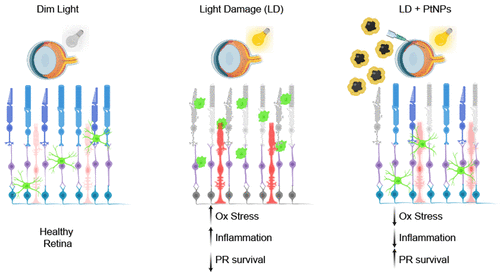
Degeneration of photoreceptors in age-related macular degeneration (AMD) is associated with oxidative stress due to the intense aerobic metabolism of rods and cones that if not properly counterbalanced by endogenous antioxidant mechanisms can precipitate photoreceptor degeneration. In spite of being a priority eye disease for its high incidence in the elderly, no effective treatments for AMD exist. While systemic administration of antioxidants has been unsuccessful in slowing down degeneration, locally administered rare-earth nanoparticles were shown to be effective in preventing retinal photo-oxidative damage. However, because of inherent problems of dispersion in biological media, limited antioxidant power, and short lifetimes, these NPs are still confined to the preclinical stage. Here we propose platinum nanoparticles (PtNPs), potent antioxidant nanozymes, as a therapeutic tool for AMD. PtNPs exhibit high catalytic activity at minimal concentrations and protect primary neurons against oxidative insults and the ensuing apoptosis. We tested the efficacy of intravitreally injected PtNPs in preventing or mitigating light damage produced in dark-reared albino Sprague–Dawley rats by in vivo electroretinography (ERG) and ex vivo retina morphology and electrophysiology. We found that both preventive and postlesional treatments with PtNPs increased the amplitude of ERG responses to light stimuli. Ex vivo recordings demonstrated the selective preservation of ON retinal ganglion cell responses to light stimulation in lesioned retinas treated with PtNPs. PtNPs administered after light damage significantly preserved the number of photoreceptors and inhibited the inflammatory response to degeneration, while the preventive treatment had a milder effect. The data indicate that PtNPs can effectively break the vicious cycle linking oxidative stress, degeneration, and inflammation by exerting antioxidant and anti-inflammatory actions. The increased photoreceptor survival and visual performances in degenerated retinas, together with their high biocompatibility, make PtNPs a potential strategy to cure AMD.

Brain Slices
(paper)
Recording Network-based Synaptic Transmission and LTP in the Hippocampal Network on a Large-scale Biosensor
IEEE BioSensors Conference (BioSensors) (2023) DOI: 10.1109/BioSensors58001.2023.10280958
2023
Keywords:
The process of learning and memory formation in the hippocampus is a complex phenomenon involving changes in synaptic efficiency that shape the connections between associated neurons. Long-term potentiation (LTP) is a widely used approach for studying activity-dependent synaptic plasticity in the hippocampus. However, conventional methods of measuring LTP using brain slices and low-density microelectrode arrays (MEAs) have limitations in spatial mapping and induction of inter-experiential variability. To overcome these challenges, we implemented a large-scale ex-vivo electrophysiological platform using a high-density CMOS-based biosensor. This approach allows simultaneous recordings of network-wide evoked synaptic responses and LTP in the hippocampal circuit. It provides a platform for large-scale spatial mapping of hippocampal synaptic activity-dependent changes modulated by external electrical stimulation and resultant network LTP in the corresponding SC pathway. This approach can potentially instantiate a large-scale model for learning and memory by identifying network LTP-induced signaling cascades and their mechanisms with applications for aging, disease, and pharmacology in the context of synaptic plasticity.

Brain Slices
(paper)
High-resolution CMOS-based biosensor for assessing hippocampal circuit dynamics in experience-dependent plasticity
Biosensors and Bioelectronics (2023) DOI: 10.1016/j.bios.2023.115471
2023
Keywords:
Experiential richness creates tissue-level changes and synaptic plasticity as patterns emerge from rhythmic spatiotemporal activity of large interconnected neuronal assemblies. Despite numerous experimental and computational approaches at different scales, the precise impact of experience on network-wide computational dynamics remains inaccessible due to the lack of applicable large-scale recording methodology. We here demonstrate a large-scale multi-site biohybrid brain circuity on-CMOS-based biosensor with an unprecedented spatiotemporal resolution of 4096 microelectrodes, which allows simultaneous electrophysiological assessment across the entire hippocampal-cortical subnetworks from mice living in an enriched environment (ENR) and standard-housed (SD) conditions. Our platform, empowered with various computational analyses, reveals environmental enrichment's impacts on local and global spatiotemporal neural dynamics, firing synchrony, topological network complexity, and large-scale connectome. Our results delineate the distinct role of prior experience in enhancing multiplexed dimensional coding formed by neuronal ensembles and error tolerance and resilience to random failures compared to standard conditions. The scope and depth of these effects highlight the critical role of high-density, large-scale biosensors to provide a new understanding of the computational dynamics and information processing in multimodal physiological and experience-dependent plasticity conditions and their role in higher brain functions. Knowledge of these large-scale dynamics can inspire the development of biologically plausible computational models and computational artificial intelligence networks and expand the reach of neuromorphic brain-inspired computing into new applications.

Brain Slices
(paper)
Alteration of neural network and hippocampal slice activation through exosomes derived from 5XFAD nasal lavage fluid
Int. J. Mol. Sci. (2023) DOI: 10.3390/ijms241814064
2023
Keywords:
Exosomes, key mediators of intercellular transmission of pathogenic proteins, such as amyloid-beta and tau, significantly influence the progression and exacerbation of Alzheimer’s disease (AD) pathology. Present in a variety of biological fluids, including cerebrospinal fluid, blood, saliva, and nasal lavage fluid (NLF), exosomes underscore their potential as integral mediators of AD pathology. By serving as vehicles for disease-specific molecules, exosomes could unveil valuable insights into disease identification and progression. This study emphasizes the imperative to investigate the impacts of exosomes on neural networks to enhance our comprehension of intracerebral neuronal communication and its implications for neurological disorders like AD. After harvesting exosomes derived from NLF of 5XFAD mice, we utilized a high-density multielectrode array (HD-MEA) system, the novel technology enabling concurrent recordings from thousands of neurons in primary cortical neuron cultures and organotypic hippocampal slices. The ensuing results revealed a surge in neuronal firing rates and disoriented neural connectivity, reflecting the effects provoked by pathological amyloid-beta oligomer treatment. The local field potentials in the exosome-treated hippocampal brain slices also exhibited aberrant rhythmicity, along with an elevated level of current source density. While this research is an initial exploration, it highlights the potential of exosomes in modulating neural networks under AD conditions and endorses the HD-MEA as an efficacious tool for exosome studies.

Acute Retina
(paper)
Birds multiplex spectral and temporal visual information via retinal On- and Off-channels
Nat. Commun. (2023). DOI: 10.1038/s41467-023-41032-z
2023
Keywords:
In vertebrate vision, early retinal circuits divide incoming visual information into functionally opposite elementary signals: On and Off, transient and sustained, chromatic and achromatic. Together these signals can yield an efficient representation of the scene for transmission to the brain via the optic nerve. However, this long-standing interpretation of retinal function is based on mammals, and it is unclear whether this functional arrangement is common to all vertebrates. Here we show that male poultry chicks use a fundamentally different strategy to communicate information from the eye to the brain. Rather than using functionally opposite pairs of retinal output channels, chicks encode the polarity, timing, and spectral composition of visual stimuli in a highly correlated manner: fast achromatic information is encoded by Off-circuits, and slow chromatic information overwhelmingly by On-circuits. Moreover, most retinal output channels combine On- and Off-circuits to simultaneously encode, or multiplex, both achromatic and chromatic information. Our results from birds conform to evidence from fish, amphibians, and reptiles which retain the full ancestral complement of four spectral types of cone photoreceptors.
Organoids & Spheroids
(paper)
Light-responsive microRNA molecules in human retinal organoids are differentially regulated by distinct wavelengths of light
iScience (2023) DOI: 10.1016/j.isci.2023.107237
2023
Keywords:

Highlights
- Human retinal organoids express majority of miRNAs typically found in developing retina
- MiRNAs are differentially expressed in response to light
- Light-regulated miRNAs have a rapid turnover in human retinal tissue
- MiRNAs respond differently to distinct wavelengths of light
Summary
Cells in the human retina must rapidly adapt to constantly changing visual stimuli. This fast adaptation to varying levels and wavelengths of light helps to regulate circadian rhythms and allows for adaptation to high levels of illumination, thereby enabling the rest of the visual system to remain responsive. It has been shown that retinal microRNA (miRNA) molecules play a key role in regulating these processes. However, despite extensive research using various model organisms, light-regulated miRNAs in human retinal cells remain unknown. Here, we aim to characterize these miRNAs. We generated light-responsive human retinal organoids that express miRNA families and clusters typically found in the retina. Using an in-house developed photostimulation device, we identified a subset of light-regulated miRNAs. Importantly, we found that these miRNAs are differentially regulated by distinct wavelengths of light and have a rapid turnover, highlighting the dynamic and adaptive nature of the human retina.

Brain Slices
Anisotropy and Frequency Dependence of Signal Propagation in the Cerebellar Circuit Revealed by High-Density Multielectrode Array Recordings
Biomedicines (2023). DOI: 10.3390/biomedicines11051475
2023
Keywords:
The cerebellum is one of the most connected structures of the central nervous system and receives inputs over an extended frequency range. Nevertheless, the frequency dependence of cerebellar cortical processing remains elusive. In this work, we characterized cerebellar cortex responsiveness to mossy fibers activation at different frequencies and reconstructed the spread of activity in the sagittal and coronal planes of acute mouse cerebellar slices using a high-throughput high-density multielectrode array (HD-MEA). The enhanced spatiotemporal resolution of HD-MEA revealed the frequency dependence and spatial anisotropy of cerebellar activation. Mossy fiber inputs reached the Purkinje cell layer even at the lowest frequencies, but the efficiency of transmission increased at higher frequencies. These properties, which are likely to descend from the topographic organization of local inhibition, intrinsic electroresponsiveness, and short-term synaptic plasticity, are critical elements that have to be taken into consideration to define the computational properties of the cerebellar cortex and its pathological alterations.

Cardiomyocyte
(paper)
Gene-Edited Human-Induced Pluripotent Stem Cell Lines to Elucidate DAND5 Function throughout Cardiac Differentiation
Cells. 2023; 12(4):520. DOI: 10.3390/cells12040520
2023
Keywords:
(1) Background: The contribution of gene-specific variants for congenital heart disease, one of the most common congenital disabilities, is still far from our complete understanding. Here, we applied a disease model using human-induced pluripotent stem cells (hiPSCs) to evaluate the function of DAND5 on human cardiomyocyte (CM) differentiation and proliferation. (2) Methods: Taking advantage of our DAND5 patient-derived iPSC line, we used CRISPR-Cas9 gene-editing to generate a set of isogenic hiPSCs (DAND5-corrected and DAND5 full-mutant). The hiPSCs were differentiated into CMs, and RT-qPCR and immunofluorescence profiled the expression of cardiac markers. Cardiomyocyte proliferation was analysed by flow cytometry. Furthermore, we used a multi-electrode array (MEA) to study the functional electrophysiology of DAND5 hiPSC-CMs. (3) Results: The results indicated that hiPSC-CM proliferation is affected by DAND5 levels. Cardiomyocytes derived from a DAND5 full-mutant hiPSC line are more proliferative when compared with gene-corrected hiPSC-CMs. Moreover, parallel cardiac differentiations showed a differential cardiac gene expression profile, with upregulated cardiac progenitor markers in DAND5-KO hiPSC-CMs. Microelectrode array (MEA) measurements demonstrated that DAND5-KO hiPSC-CMs showed prolonged field potential duration and increased spontaneous beating rates. In addition, conduction velocity is reduced in the monolayers of hiPSC-CMs with full-mutant genotype. (4) Conclusions: The absence of DAND5 sustains the proliferation of hiPSC-CMs, which alters their electrophysiological maturation properties. These results using DAND5 hiPSC-CMs consolidate the findings of the in vitro and in vivo mouse models, now in a translational perspective. Altogether, the data will help elucidate the molecular mechanism underlying this human heart disease and potentiates new therapies for treating adult CHD.

.svg)